In this section you will find the images, maps, and tables used within the video. There could also be a few assets that were not used within the video but are related to the subject matter. Click image to view full size.
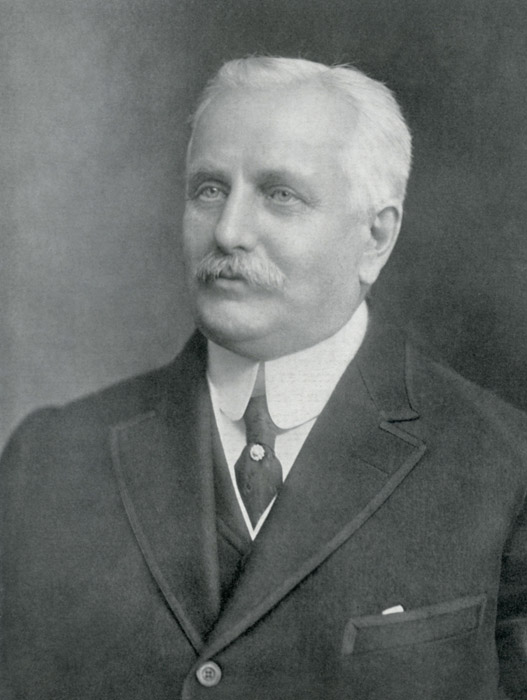
Frank Woolworth. April 15, 1852 – April 9, 1919
Birds eye view of Detroit 1889
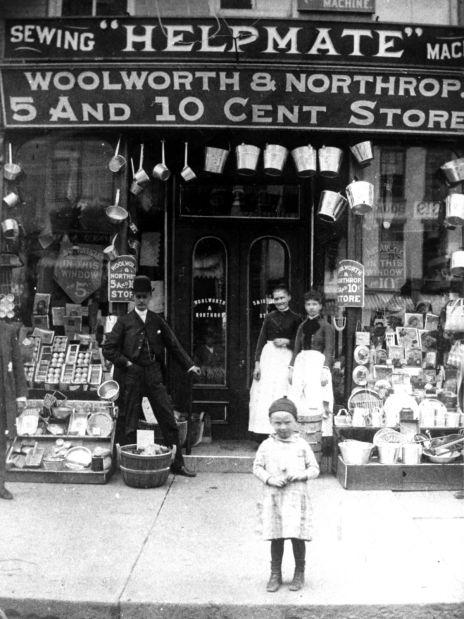
In its beginnings, F.W. Woolworth had a partner. Shown here in an undated photo, it was Woolworth and Northrop, 5 cent and 10 cent store.
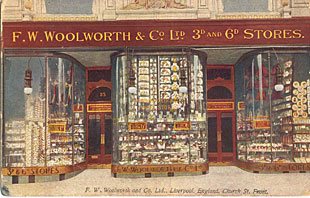
On 5 November 1909 Frank Woolworth opened his first store outside North America. 5¢ & 10¢ became Threepence and Sixpence for the branch in Church Street, Liverpool, England.
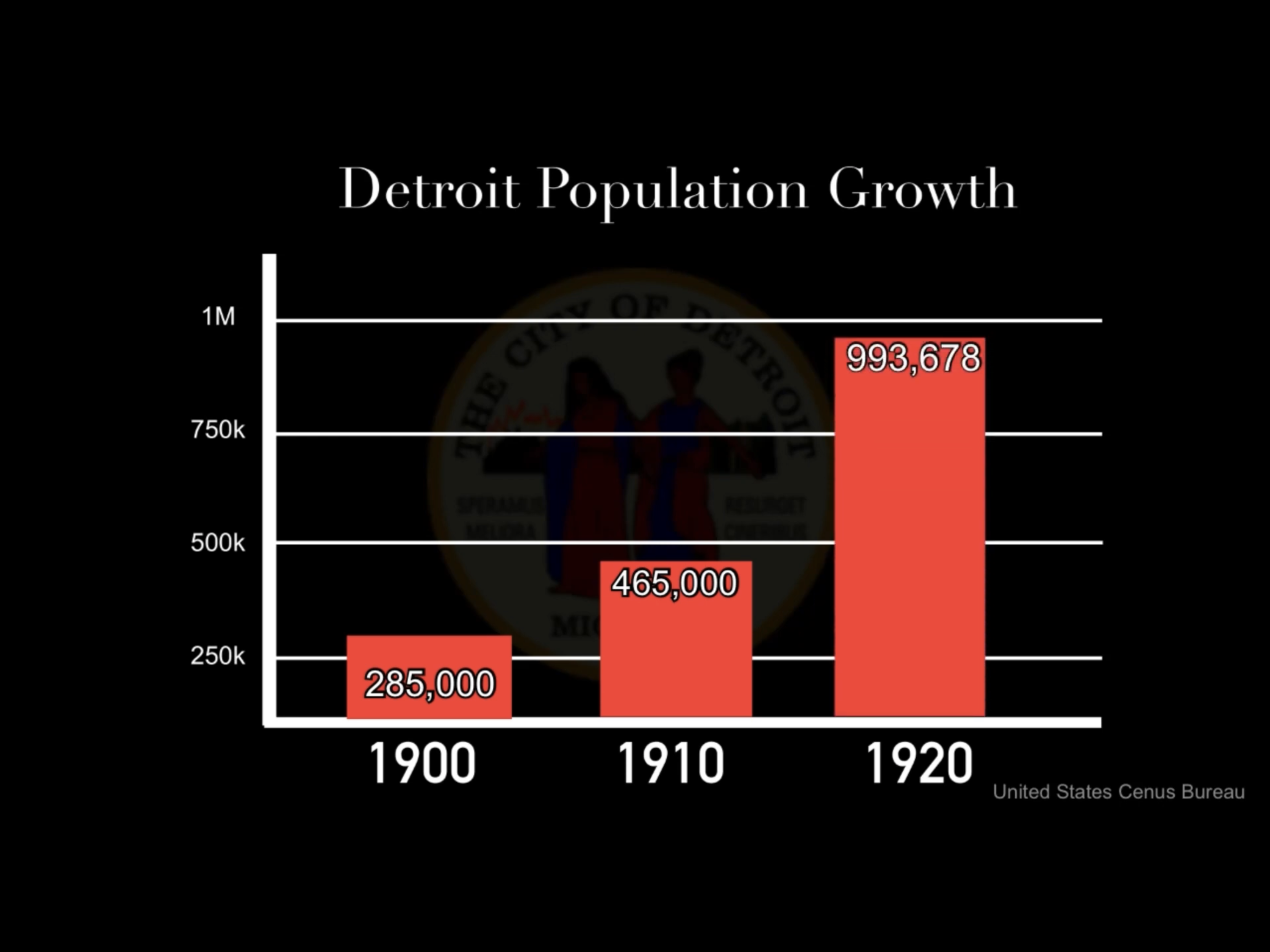
Graph showing Detroit population growth in the early 20th century.
Graph indicating population growth for Ferndale, MI. for the decade from 1920 to 1930.
234 West Nine Mile Rd. Ferndale Woolworth’s – 1928
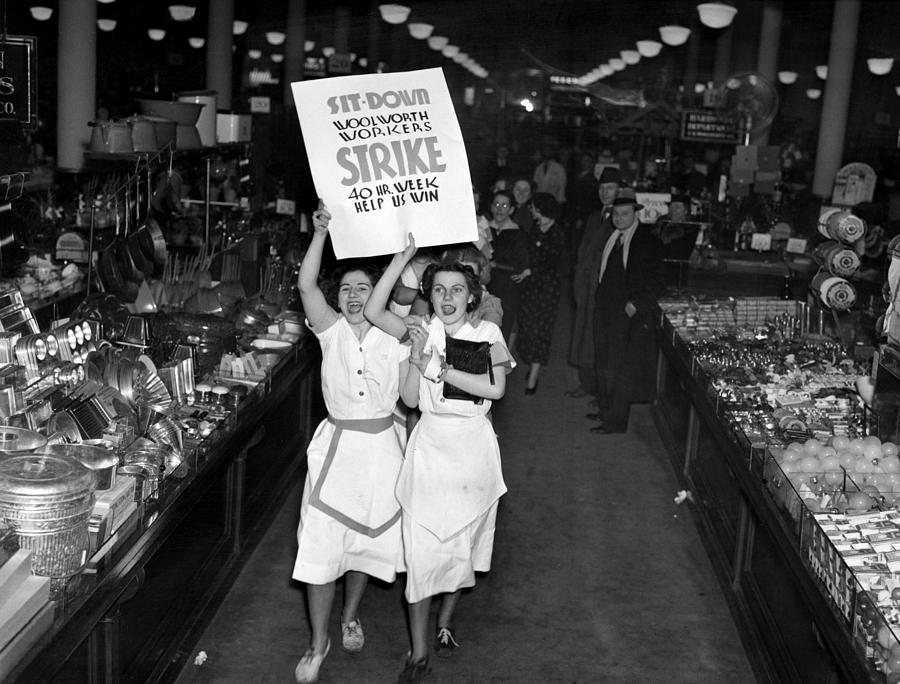
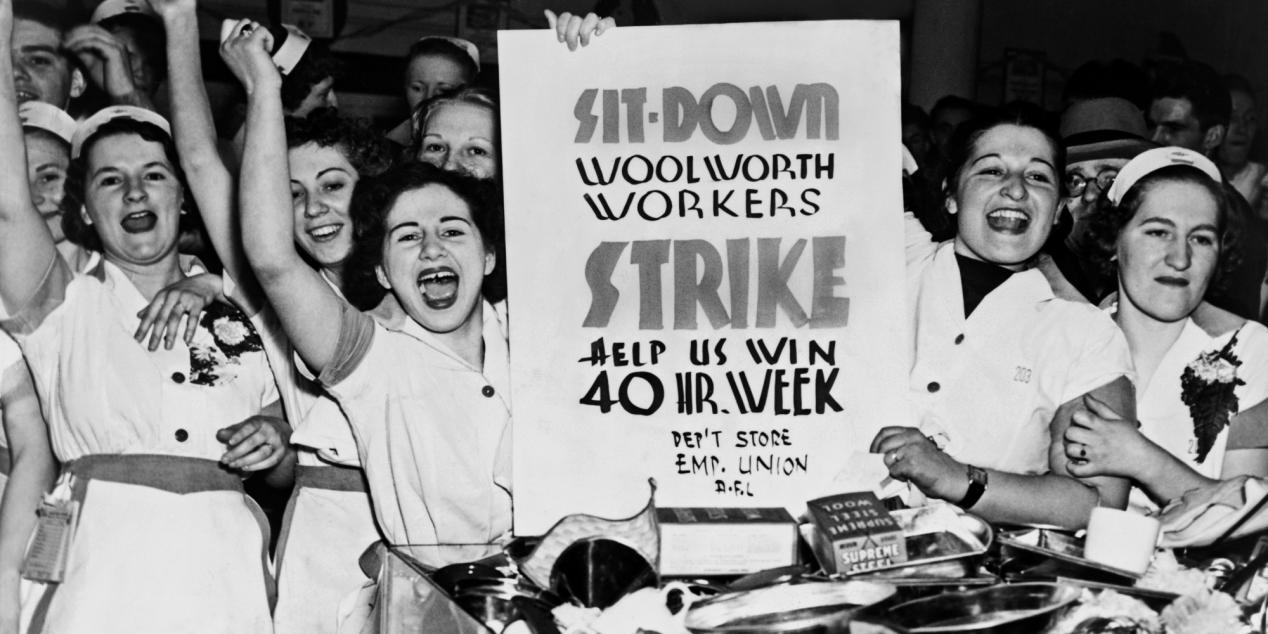
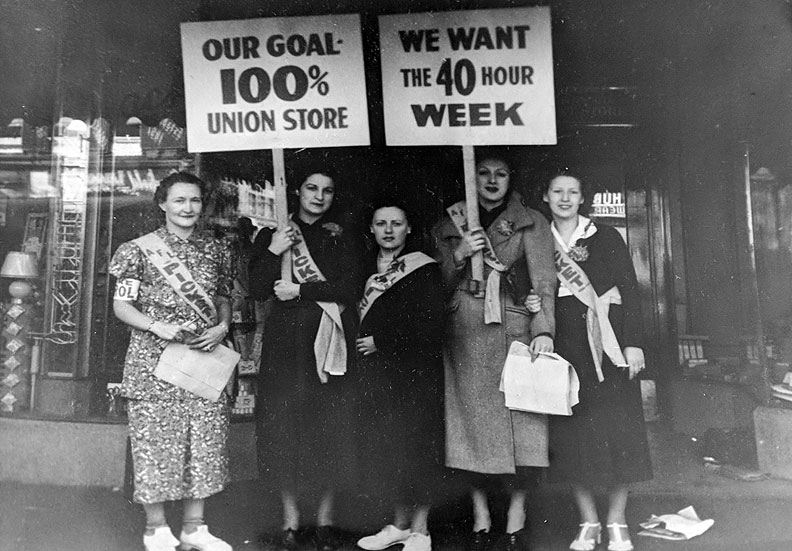
Woolworth workers go on strike demanding equitable working conditions and better pay.
They organize and became unionized. Their demands were meet although the victory was short lived.
The predominantly female workforce campaigned for unionization and a 40 hour work week.
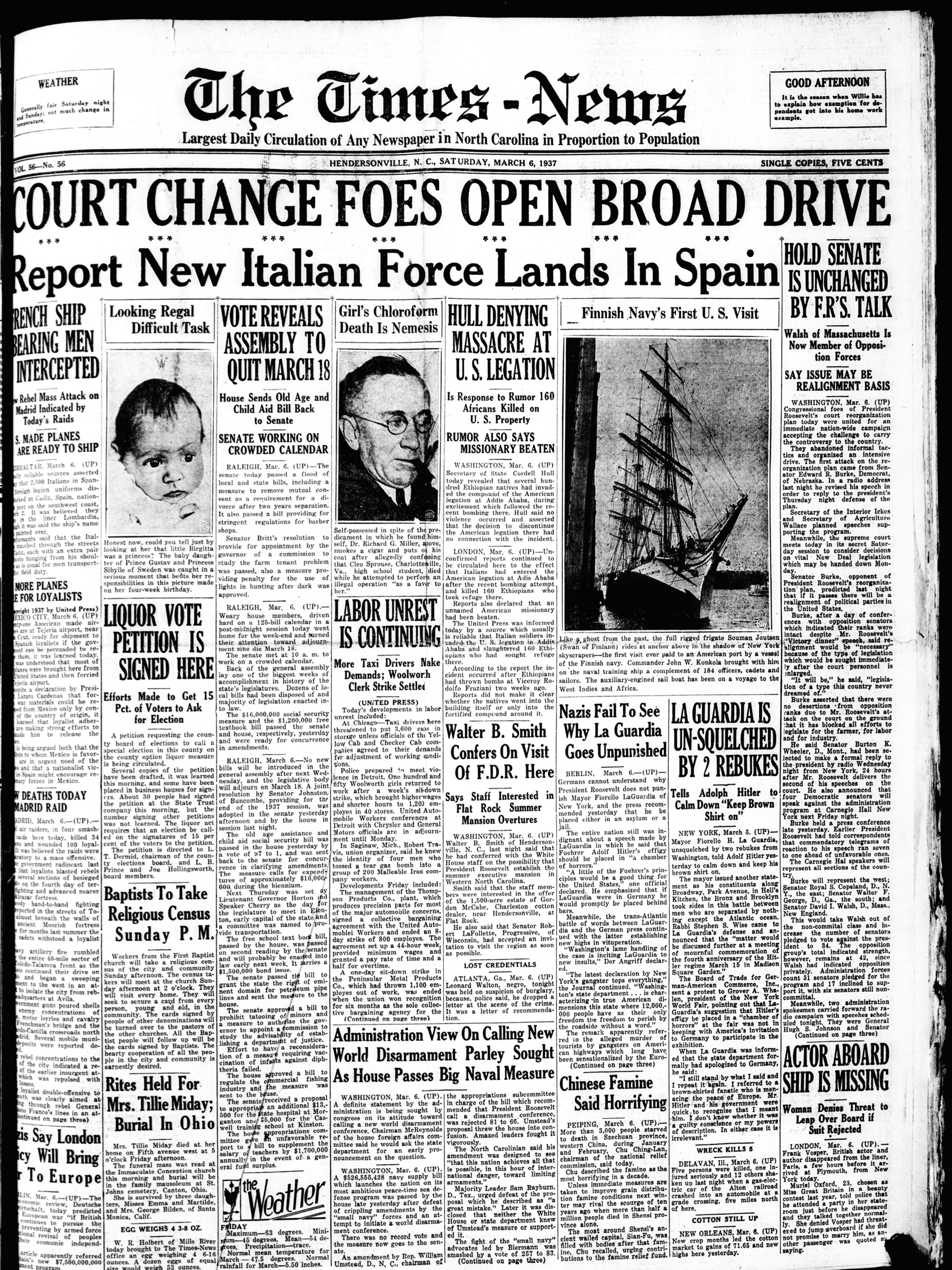
The Times News newspaper front page with article about labor unrest including Detroit Woolworth store workers’ strike. March 6, 1937.
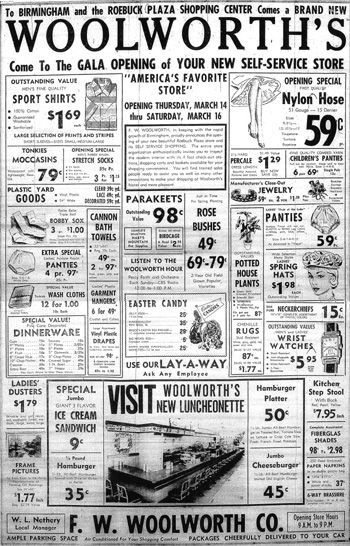
Advertisement announcing new store opening, note “New Luncheonette” announcement.
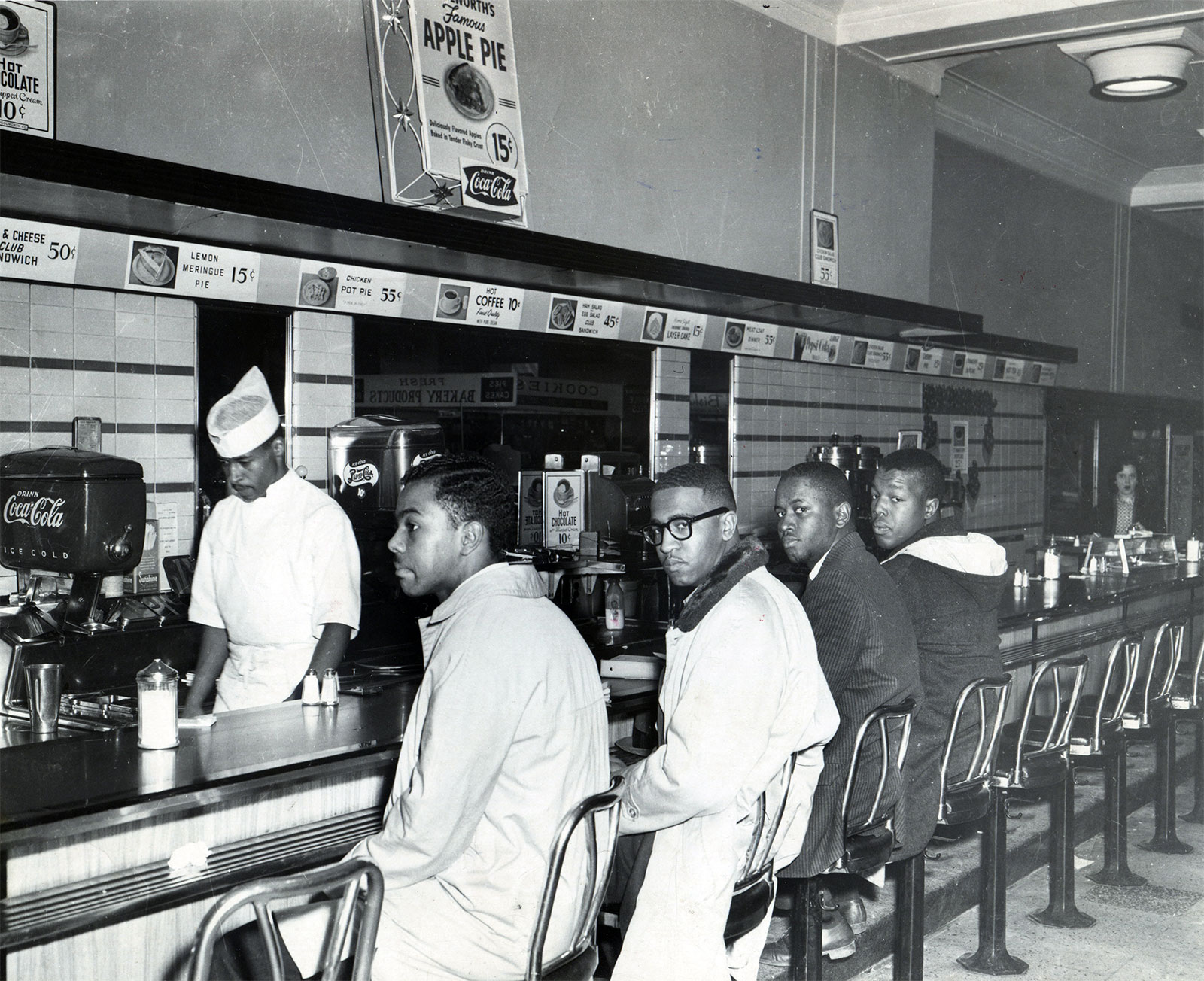
The Greensboro Four take their places at the Woolworth’s lunch counter in Greensboro, NC. (Jack Moebes / Corbis)
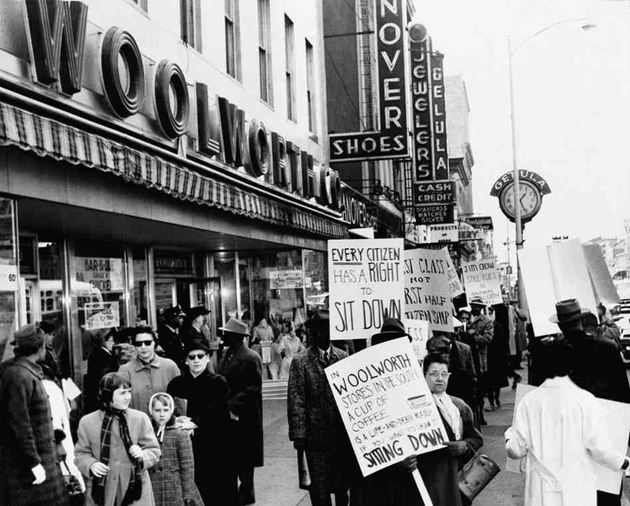
Protesters outside Greensboro, NC Woolworth store in support of the four students.
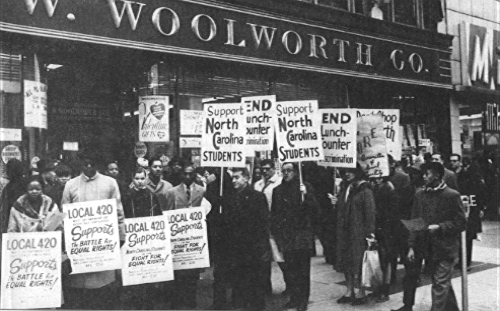
Demonstrators holding signs, protest in front of an F.W. Woolworth store in Harlem, NYC.
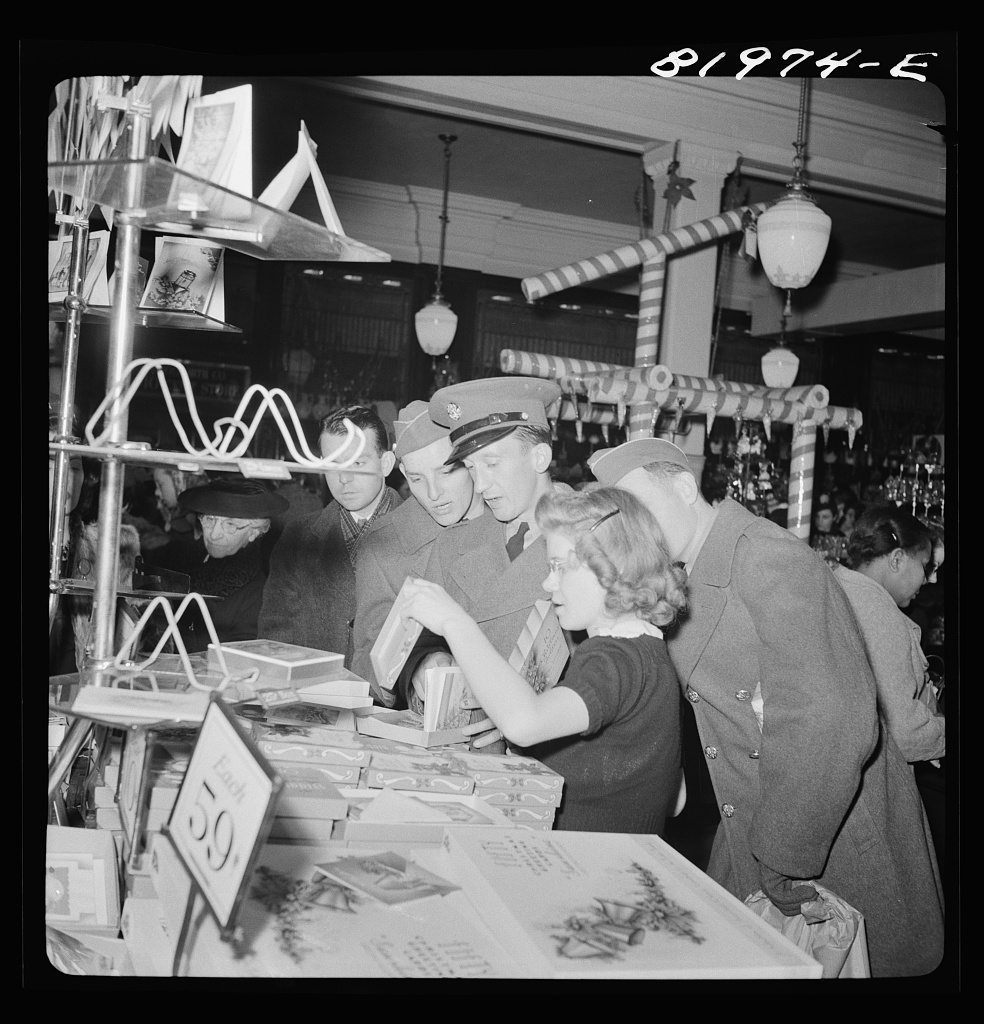
Washington, D.C. Christmas shopping in Woolworth’s five and ten cent store in the 1950s.
Further Research Material
The Women’s Woolworth sit-down protests that began in Detroit are considered to have been the catalyst for the acceptance of the 40 hour work week.
The diner sit-in protests resulted in the diners opening up to everyone. It was a pivotal moment in the Civil Rights movement. Behind the counter, 23-year-old Charles Bess was working at the restaurant as a busboy during the sit-ins. Hear from him in this interview.
The rapid growth of home ownership and the rise of suburban communities helped drive the post-war economic boom. Suburban neighborhoods of single-family homes grew on the outskirts of cities. More on the growth of the suburbs found in this webpage.